The 5-Second Rule: AI in Sales Speed-to-Lead
Sales, Speed-to-Lead, AI Automation
The 5-Minute Rule Is Dead — The New Standard Is 5 Seconds
On SilverCore.io, we’ve been tracking one brutal truth: the old “call every lead within five minutes” mantra is now a relic. In 2026, buyers expect acknowledgment in seconds and a real conversation in under a minute. Speed-to-contact is no longer a competitive advantage; it’s table stakes. The companies that win are the ones that turned instant, AI-powered response into infrastructure, not aspiration.
Speed-to-Contact: From Differentiator to Baseline Expectation
For years, sales teams quoted the same stat: respond within five minutes and you dramatically increase your chances of closing the deal. That might have been true when average response times were measured in hours. But the bar has shifted. In 2026, buyers expect automated engagement in under one second and a live human within 60 seconds when intent is high, according to benchmarks from Leadchaser and GreetNow (leadchaser.ai, greetnow.com).
At the same time, most companies are still stuck in the past. A 2026 study of 1,000 businesses found the average lead response time is over 29 hours, and 63.5% never respond at all (apten.ai). Against that backdrop, simply responding is no longer impressive. What matters is how fast and how intelligently you respond compared with the handful of competitors that are also modernizing.
Why 5 Seconds Beats 5 Minutes: The Data Case for Instant AI Response
The math is unforgiving. Companies that respond within five minutes see 3–4× higher conversion rates than those taking an hour (r/SaaS audit). But AI has compressed that advantage even further:
AI-enabled teams now respond to new leads in under 5 seconds to about 60 seconds, while human-only teams average hours or days (memox.io, apten.ai).
In shared-lead marketplaces, the first responder wins up to 78% of the business (getnextphone.com).
81% of companies that take more than an hour to respond report losing deals to faster competitors (apten.ai).
When AI can acknowledge a lead in under a second and schedule a meeting in under a minute, a “fast” five-minute call is suddenly late. By the time your rep dials, the buyer may already be in a live demo with a competitor who automated their first touch.
📌 Key Takeaway: In 2026, “fast” means sub-minute. Anything slower is invisible next to AI-powered competitors.
Why Speed Alone Isn’t Enough: Human-Centered Automation
There is a catch: bots that respond quickly but feel like brick walls can actually reduce conversion by 15–20% compared with fast human follow-up (greetnow.com). The winning pattern is not bots instead of people; it’s bots that bridge the gap until a human can join the conversation.
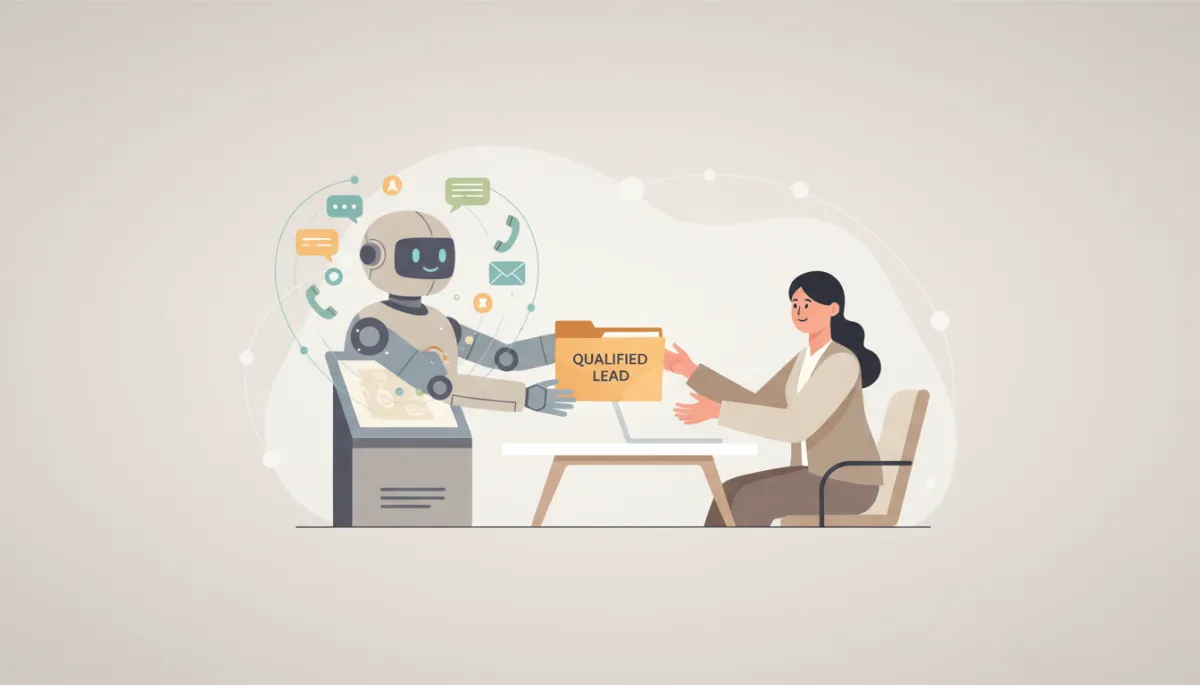
The best systems use AI for instant contact, then hand off to humans within seconds.
That’s where modern AI shines. Today’s agents can:
Greet the lead in under three seconds via chat, SMS, or WhatsApp.
Qualify intent with a few natural-language questions.
Book meetings directly on your team’s calendars or trigger an instant phone call.
Automation handles the first contact and the logistics; humans handle nuance, trust, and closing. The result: response times in seconds, not hours, without sacrificing relationship quality.
A Tactical, Step-by-Step Framework for Instant-Response Infrastructure
Turning this into reality doesn’t require a rip-and-replace overhaul. Here’s a practical roadmap you can execute over the next 30–60 days.
Step 1: Map Every Entry Point for Leads
List all channels where a prospect can raise their hand: web forms, chat widgets, phone, email, social DMs, marketplaces, and partner referrals.
For each, record current first-response time and who “owns” it.
💡 Pro Tip: Don’t forget after-hours. Up to 40% of high-intent leads now come in when your team is offline (apten.ai).
Step 2: Centralize Lead Capture and Routing
Connect every form, chat, and inbound channel to a single CRM or customer data platform.
Define routing rules: by territory, product line, deal size, or account owner.
This is your nervous system. Without it, your AI can’t act consistently or hand off cleanly.
Step 3: Deploy AI for Sub-Second Acknowledgment
Add an AI assistant to your highest-intent surfaces (pricing pages, demo forms, “contact sales” pages).
Configure it to respond instantly with a personalized greeting, referencing the page, campaign, or offer that brought the lead in.
Benchmarks show AI chatbots routinely reply in under three seconds, versus human first-response times of several hours (thunderbit.com). That’s your new baseline.
Step 4: Automate Qualification and Scheduling
Teach your AI to ask 3–5 key questions: budget, timeline, use case, and decision role.
Integrate calendars so qualified leads can book a time on the spot—no back-and-forth emails.
Many teams see 50%+ reductions in time-to-meeting when AI handles this logistics layer, and Gartner projects a 50% cut in prospecting and prep time by 2026 for AI-enabled sales orgs (Gartner via Wikipedia).
Step 5: Build Real-Time Human Handoff
Configure instant alerts (Slack, SMS, mobile push) when a high-intent lead is live with your AI.
Let reps “drop into” the conversation or trigger a click-to-call within 60 seconds for hot opportunities.
Think of AI as your 24/7 SDR. Its job is to keep the buyer engaged until a human can join, not to wall them off.
Step 6: Measure, Optimize, and Expand
Track first-response time by channel, AI-to-human handoff time, meeting booked rate, and conversion to opportunity.
Compare cohorts: leads touched in under 60 seconds vs. slower. Expect 2–4× lift in conversion when you’re consistently in the sub-minute band.
The New Standard: 5 Seconds or You’re Forgotten
Lead decay is faster than ever. After 30 minutes, many prospects can’t even remember which form they filled out, and modern call-screening tools may block unfamiliar numbers that try to follow up later (apten.ai). Meanwhile, AI systems are quietly responding in seconds, booking meetings, and moving deals forward while traditional teams are still triaging their inboxes.
On SilverCore.io, our stance is simple: the 5-minute rule is dead. The new standard is 5 seconds to contact, 60 seconds to conversation. Treat speed-to-contact not as a bragging right, but as a non-negotiable baseline—then use AI-powered automation to make it your default behavior, 24/7, across every channel.
The businesses that build this instant-response infrastructure now will keep winning deals long before their competitors even see the lead.