Boost Referrals with Strong Social Media Presence
Referrals, Online Visibility, Senior Market, Practice Growth
Your Referrals Are Checking Your Social Media Before They Call
Why online visibility is the missing layer in every referral-based senior market practice—and how to build it without becoming a full-time content creator.
The New Gap Between a Referral and the First Call
A colleague of mine—a seasoned financial planner with twenty-two years in the senior market—called me with a problem she could not quite name. Her referral partners were active, her clients were loyal, and her reputation was rock solid. Yet a meaningful share of the families referred to her never booked that first call.
We walked through her online footprint together. Her last Facebook post was eight months old. Her LinkedIn profile was two years out of date. Her website still listed a phone number from a previous office. The families her partners were sending did what almost every consumer does now—they searched. What they found online did not match the glowing recommendation they had just received offline.
This is not an isolated story. A 2024 consumer study found that over 80 percent of people, including those over 60, check online presence before contacting a service provider, even when they were personally referred. In parallel, BrightLocal reported that 98 percent of consumers used the internet to research local businesses in the last year, and 87 percent read reviews before making first contact. For families navigating senior care, this is simply how they protect someone they love.
📌 Key Takeaway: Your online presence is now an extension of your referral partners’ credibility. It either confirms their trust—or quietly erodes it.
Why Online Visibility Matters in Referral-Based Senior Practices
Most senior market professionals built their businesses the right way—through deep relationships, excellent service, and consistent follow-through. Referrals remain the highest-trust, highest-conversion source of new families. Studies show that 92 percent of consumers trust personal referrals, and referral-sourced clients convert at three to five times the rate of paid channels while costing roughly 25 percent less to acquire.
But the referral journey has changed. Instead of moving directly from recommendation to phone call, families move from recommendation to research. They scan your Facebook page, your LinkedIn profile, your Google Business listing, and increasingly, what AI tools like ChatGPT or Gemini can find about you. Recent local visibility data shows that AI recommendations are far more selective than traditional search—only about 1–11 percent of locations that rank well in Google’s local pack are recommended in AI answers. If you have little or no content, you are invisible in that part of the journey.
For a referral-based senior practice, this creates a silent leak in your pipeline. The referral is warm. The need is real. But the online confirmation is missing—or worse, out of date. The family hesitates. Some never call. Others ask your referral partner for a second or third name. Over time, your position on that short list quietly weakens.
Social Media as the Confirmation Layer for Referrals
Social media is not replacing referrals in the senior market—it is confirming them. When a family looks you up on Facebook or LinkedIn after a recommendation, they are asking three quiet questions:
Are you active and engaged in your work right now?
Do you clearly specialize in the issue we are facing?
Do other families and professionals trust you?
A Facebook page that has not been updated since last year, or a LinkedIn profile without a photo or current bio, answers all three questions in the wrong direction—even if your offline practice is thriving. By contrast, a simple stream of recent, helpful posts and a handful of current Google reviews sends a clear, calming signal: this professional is present, responsive, and trusted.
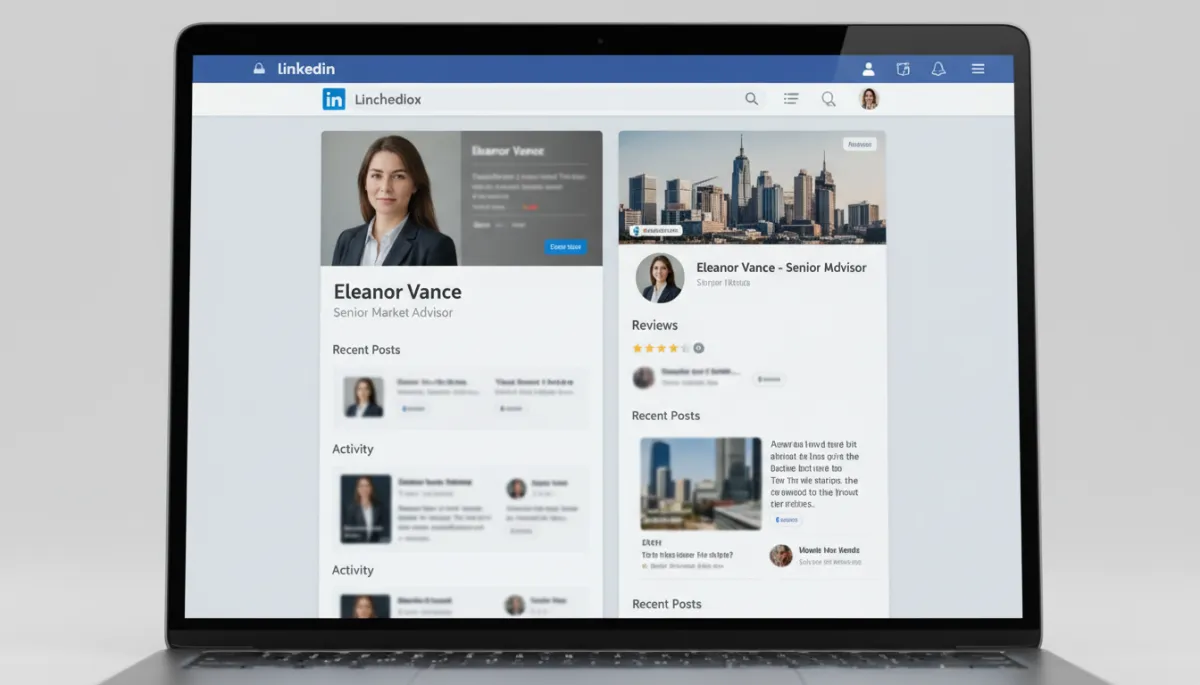
Current profiles and fresh reviews quietly confirm the trust your partners have already created.
You Do Not Need to Become a Full-Time Content Creator
Many senior market professionals resist social media because they associate it with trends, dancing videos, or a constant demand to be “on.” That is not what your practice requires. You do not need a personal brand. You need reliable confirmation signals for the families your partners are already sending.
A credible online presence can be built with a simple, sustainable system:
Two to three posts per week on your primary platform (usually Facebook for families, LinkedIn for professionals).
Four to six recurring content themes—for example, education, process explanations, client impact stories (with permission), referral partner spotlights, and practical checklists.
Batching and scheduling so that content is created once and published automatically over several weeks.
💡 Pro Tip: Think of each post as a brief client conversation—not a marketing campaign. Your everyday explanations are exactly the content your referrals need to see.
A Practical Framework for Maintaining Online Credibility
Step 1: Audit and Align Your Presence
Start by searching your own name and your business name. Open your Facebook page, LinkedIn profile, Google Business listing, and website. Ask:
Is my contact information current and consistent everywhere?
Does my photo and bio reflect who I am and whom I serve today?
When was my last visible post or review?
Step 2: Prioritize the Right Platforms
You do not need to be everywhere. For most senior market practices, a focused stack is enough:
Facebook — where families check for recency, tone, and community presence.
LinkedIn — where referral partners validate your credentials and specialization.
Google Business — your primary hub for reviews, directions, and “near me” searches.
Step 3: Build a Simple Content Rhythm
Choose a small set of themes and rotate them:
Educational posts — “Three questions to ask before choosing an assisted living community.”
Process explainers — “What happens in our first 30 minutes together.”
Client impact stories (with permission) — focusing on outcomes and relief, not details.
Referral partner acknowledgments — highlighting collaboration and shared wins.
Then batch. Many professionals maintain a credible presence with 45–90 minutes of content creation per month, using scheduling tools to automate posting. SilverCore’s scheduling features, for example, allow you to load two to three weeks of posts at once—then get back to serving families while your visibility runs in the background.
Step 4: Systematize Reviews and Engagement
Reviews are a core credibility signal for both search engines and AI assistants. BrightLocal’s research shows that businesses with 10 or more recent reviews convert significantly better than those with only a handful, even when star ratings are similar. Build a simple review habit into your client offboarding—one short, personal request within a week of a positive outcome can transform your profile over a year.
Finally, reserve five to ten minutes a day to respond to comments, acknowledge messages, and interact with referral partners’ posts. Scheduled content builds visibility—live engagement builds relationship.
From Invisible Online to Fully Aligned with Your Reputation
My colleague with the inactive Facebook page did not become a social media personality. She updated her profiles, wrote three posts that spoke directly to the families she serves, and asked a few of her best clients for honest Google reviews. Within a month, her referral conversion rate improved. Partners began mentioning that families commented on how quickly and professionally she responded—and how reassuring it was to see her expertise reflected online before they called.
Your reputation has already earned you the referral. Your online visibility is what closes it. In a world where nearly half of all searches have local intent and AI-driven answers are shaping more decisions every quarter, you cannot afford to be invisible—or outdated—between the recommendation and the first call.
📌 Key Takeaway: Visibility is the new referral engine—not instead of referrals, but alongside them. The practices that build both are compounding their growth while others wait for the phone to ring.
Take the Next Step: Design Your Visibility System
You do not need another marketing experiment. You need a simple, dependable system that ensures every referral finds the same professional online that your partners describe offline—a system that captures every lead, automates follow-up, and keeps your social presence active without turning you into a full-time content creator.
That is exactly why I built SilverCore.io—for insurance agents, Medicaid planners, senior placement professionals, financial advisors, and elder law attorneys who want modern visibility and follow-up systems without adding another full-time job to their calendar.
If you are ready to turn your online presence into a true extension of your referral engine, learn more at https://silvercore.io—and see how a purpose-built growth system can help you capture every lead, strengthen partner trust, and let the right families find the confirmation they are already looking for.
About the Author
Sara Guida is the Founder of SilverCore.io, a growth system built specifically for professionals serving the senior market. Sara helps insurance agents, Medicaid planners, senior placement professionals, financial advisors, and elder law attorneys capture every lead, automate follow-up, and scale their businesses with simple systems that work. To explore how SilverCore can support your practice, visit silvercore.io.