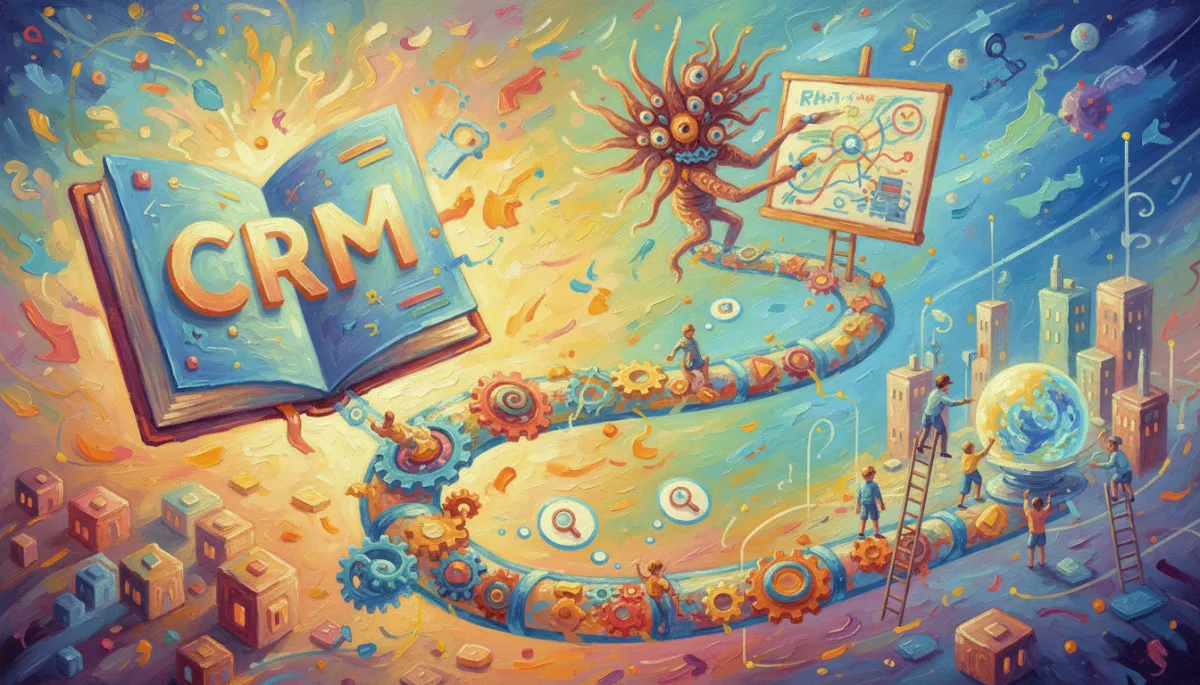
Transform Your CRM: From Contacts to Storytelling
CRM, Pipeline Management, Real-time Insights
Your CRM Should Tell You a Story, Not Just Store Contacts
On a rainy Tuesday afternoon, Maya stared at her CRM dashboard and felt… nothing. Rows of names, dates, and deal values blinked back at her like a spreadsheet in disguise. Her agency had invested heavily in a new system, but all she saw was a glorified contact list. No narrative. No sense of momentum. No clue where tomorrow’s revenue would really come from.
Yet buried in that data was the entire story of her business: who had just discovered her brand, who was on the fence, who needed a nudge, and who was ready to sign. The problem wasn’t the information; it was the way it was presented. The CRM offered storage, not storytelling. And without a story, Maya’s team was flying blind.
From Static Database to Living Story
Imagine walking into a bookstore where every book is stripped of chapters, page numbers, and titles. The words are all there, but you have no idea where to start or how anything connects. That’s what a contact-focused CRM feels like. Names without context. Deals without direction. Activities without meaning.
A modern CRM should do more than hold information. It should tell you the story of your pipeline—who your characters are, where they are in their journey, and what needs to happen next. That’s where CRM visibility, structured pipeline stages, activity tracking, and real-time insights come together to turn chaos into clarity for businesses and agencies alike.
Why Real-Time Pipeline Visibility Changes the Plot
One month after that rainy Tuesday, Maya’s story looked very different. She had switched from refreshing weekly reports to watching her pipeline move in real time. Deals slid from “Qualified” to “Proposal Sent” while she was still in meetings. New leads appeared instantly after a webinar. Stalled opportunities flashed like warning lights instead of quietly expiring in the background.
Real-time pipeline visibility is the difference between reading yesterday’s news and watching a live broadcast. When your CRM updates the moment a call is logged, an email is opened, or a contract is signed, your team can act while the story is still unfolding. You’re no longer guessing which deals are healthy; you can see it, clearly, as it happens.
💡 Pro Tip: If you have to export data to a spreadsheet to understand your pipeline, your CRM visibility isn’t truly real-time yet.
For agencies juggling dozens of clients, or sales teams managing hundreds of prospects, these real-time insights aren’t a luxury. They’re how you spot early which campaigns are working, which deals are at risk, and where your next month’s revenue is hiding. The story of your pipeline shouldn’t be a mystery revealed at the end of the quarter—it should be a narrative you can follow every single day.
Structured Pipeline Stages: Chapters Your Team Can Follow
Before Maya redesigned her CRM, her pipeline stages read like a vague outline: “New,” “In Progress,” “Follow-up,” “Closing.” Each rep interpreted them differently. Some moved deals forward after a single email; others waited for a full discovery call. The result? Inconsistent data, unpredictable forecasts, and a story no one could quite trust.
Structured pipeline stages are like clear chapter headings in a book. They tell everyone exactly where a deal is in its journey. Instead of fuzzy labels, Maya rebuilt her pipeline with deliberate, behavior-based stages:
New Lead – Contact captured but not yet qualified.
Qualified Opportunity – Budget, need, and timeline confirmed.
Discovery Completed – Strategy or scoping call finished.
Proposal Sent – Formal offer shared with the client.
Negotiation / Review – Feedback received, terms under discussion.
Closed Won / Closed Lost – Final outcome recorded with reasons.
With these structured stages, pipeline management became far more than dragging deals from left to right. It became a shared language. Everyone knew what had already happened in a deal and what needed to happen next. The CRM started telling a coherent story—one any team member could read and instantly understand.
Activity Tracking: The Scenes Between the Chapters
Of course, chapters alone don’t make a story. What really brings your pipeline to life are the scenes in between—the calls, emails, meetings, and notes that explain why a deal is moving or stalling. That’s where activity tracking turns your CRM from a static board into a living journal of every interaction.
Maya’s team started logging every meaningful touchpoint: discovery questions, client objections, follow-up dates, and even small personal details that made relationships feel human. Over time, patterns emerged. Deals with at least three touchpoints in the first week closed at a far higher rate. Opportunities with long gaps between activities almost always went cold. These weren’t guesses anymore; they were real-time insights drawn straight from the CRM’s activity history.

Tracking every activity reveals patterns that quietly shape your entire pipeline.
For agencies, this level of detail is gold. When a client asks, “Where are we with this proposal?” you’re not guessing. You can see the last email, the last call, the internal notes, and the next step in one place. Activity tracking turns your CRM into a trustworthy narrator, not an unreliable one.
Automatic Alerts: The Plot Twists You Never Miss
Even with structured stages and rich activity tracking, human beings miss things. We forget to follow up. We overlook a quiet account about to churn. We underestimate how long a contract has been “with legal.” That’s where automatic alerts step in as your story’s helpful narrator, whispering, “Hey, you’re about to miss something important.”
Maya set up simple but powerful rules inside her CRM:
Inactivity alerts when no activity occurred on a hot deal for seven days.
Stage aging alerts when a deal sat in “Proposal Sent” for more than ten days.
Value-based alerts for high-value opportunities that changed stage or lost momentum.
Renewal reminders for retainers coming up for renewal within 60 days.
These automatic alerts didn’t just nag her team; they reshaped behavior. Reps jumped on stalled deals sooner. Account managers reached out to clients well before renewal dates. Leadership had fewer “How did we miss this?” moments. The CRM was no longer a silent archive—it was an active voice in the room, guiding the plot of every relationship.
📌 Key Takeaway: Automatic alerts are your early-warning system, turning potential losses into timely opportunities to re-engage.
Practical Steps to Improve Pipeline Management Today
Transforming your CRM from a contact warehouse into a living story doesn’t require a complete system overhaul. It starts with a series of intentional steps that any business or agency can take, regardless of size or industry. Here’s how to begin rewriting your pipeline narrative:
Redefine your pipeline stages. Gather your sales or account team and map the actual journey your clients take—from first touch to closed deal. Turn that journey into clear, behavior-based stages. Remove vague labels and replace them with specific milestones everyone understands.
Standardize activity tracking. Decide which activities must always be logged: discovery calls, proposals, demos, key emails, and major decisions. Train your team to record these consistently. The richer your activity history, the more meaningful your CRM visibility becomes.
Turn on real-time dashboards. Build views that show your pipeline by stage, owner, and expected close date. Make sure they update instantly as deals move. For agencies, create separate dashboards by client or campaign so you can see each story unfold at a glance.
Set up smart alerts. Start simple: inactivity alerts, stage aging alerts, and renewal reminders. Over time, refine your rules based on what actually predicts risk or opportunity in your world. Let automatic alerts quietly guard your pipeline in the background.
Review your story weekly. Make your pipeline review more than a numbers meeting. Ask: Which deals moved and why? Which are stuck, and what’s the next scene? What real-time insights did we gain from last week’s activities? This turns pipeline management into an ongoing narrative, not a monthly chore.
As you follow these steps, you’ll notice something subtle but powerful: your CRM starts to feel less like software and more like a shared story your entire team is writing together. Each logged call, each updated stage, each alert answered adds another line to the plot of your business growth.
Let Your CRM Become the Storyteller of Your Growth
Maya’s agency didn’t suddenly double revenue overnight. But within a few months of rethinking their CRM, something changed. Forecasts became more accurate. Deals stopped slipping through the cracks. Clients felt more cared for, because follow-ups were timely and thoughtful. The team could open the CRM and instantly see not just who was in the pipeline, but what was happening and why.
That’s the power of combining real-time pipeline visibility, structured stages, activity tracking, and automatic alerts. It’s not about adding more data; it’s about arranging that data so it tells the true story of your business. A story you can act on. A story that reveals risk early and highlights opportunity clearly. A story that guides your next move instead of leaving you guessing.
Your CRM can be a silent filing cabinet—or it can be the narrator of your growth. When you embrace CRM visibility, thoughtful pipeline management, and real-time insights, every contact becomes a character, every stage a chapter, and every closed deal a satisfying ending to a well-told tale. The only question left is: what story do you want your pipeline to tell next?