Effective Follow-Up in Senior Market Sales
Senior Market Services, Sales Follow-Up, Lead Nurturing
The Lead Was Not Cold. Your Follow-Up Just Stopped.
Why 80% of sales in senior market services happen after the fifth contact, and why most professionals never reach it. By Sara Guida, Founder of SilverCore.io.
The Moment I Realized “No Response” Was Not “No Interest”
I used to tell myself that a lead who did not respond after two attempts was not a serious prospect. I told myself they were probably just shopping around, or that the timing was not right, or that they would call back when they were ready. I had a story for every lead that went quiet, and that story always made it feel okay to stop following up.
Then I started tracking what happened to those leads. What I found was uncomfortable: a meaningful percentage of the leads I had written off as uninterested eventually became clients of other providers. Not because those providers were better than me. In several cases, their reviews were weaker, their services less specialized, and their pricing higher. They won the business because they kept showing up after I stopped.
The question every senior market professional should be sitting with is this: when a lead goes quiet, are they uninterested, or have you simply not reached out enough times? Research from HubSpot and the National Sales Executive Association, echoed in more recent follow-up studies, answers this clearly: around 80% of sales require five or more follow-up contacts, yet roughly 44% of professionals stop after just one (HubSpot). The gap between where most businesses stop and where most deals close is not a mystery. It is a measurable, preventable, and entirely fixable failure in the follow-up system.
📌 Key Takeaway: The leads are not cold. The follow-up just stopped.
Why 80% of Senior Market Sales Happen After the Fifth Contact
In senior market services, the decision cycle is longer, more emotional, and more complex than in most other industries. Families are not choosing a gym or a software subscription. They are choosing where a parent will live, how care will be paid for, and who will guide them through Medicaid rules, insurance options, or legal planning. That kind of decision does not resolve in one or two touchpoints. It unfolds in stages.
The first contact is often about relief: “Someone called me back.”
The next few are about clarity: “What are my options? What does this cost?”
Only after several touchpoints does trust mature into readiness: “I feel safe moving forward with you.”
That is why the statistic that 80% of sales happen after the fifth contact is even more pronounced in senior-focused services. Rain Group and other sales research firms consistently find that top performers average five or more contact attempts before a conversion, while average performers make far fewer. The difference is not charm. It is persistence, delivered with empathy.
The Emotional Complexity Families Are Carrying
Here is the thing about follow-up in the senior market: it feels uncomfortable in a way it might not in other industries. You are talking to adult children who have not slept well in weeks, spouses who are terrified about money, and siblings who cannot agree on what “the right thing” looks like. They are juggling hospital updates, work deadlines, and late-night Google searches about care levels and benefits. Your email or text is one of dozens of urgent inputs in a very crowded emotional inbox.
When these families go quiet, it is rarely because they do not care. It is because they are overwhelmed. Silence often means, “I want to deal with this, but I cannot right now.” In that context, gentle, consistent follow-up is not pressure. It is a form of care. It says, “I have not forgotten you. I am still here when you are ready.”
💡 Pro Tip: Treat every follow-up as a small act of support, not a chase for a signature.
The Hidden Cost of Stopping Too Soon
Studies summarized by Amra & Elma show that teams with structured, multi-touch follow-up systems see conversion lifts of 35% or more, while those who stop after a single attempt close only a fraction of what they could. InsideSales Labs found that dropping off after one follow-up yields about a 3% close rate, while executing five or more touches raises that to nearly 13%—a more than threefold increase in outcomes purely driven by persistence.
For a senior placement agency, Medicaid planner, or elder law firm, that gap translates directly into families not served and revenue left on the table. The average service professional makes roughly 1–2 contact attempts per lead. The average number needed to convert is five or more. That difference is the leak in the bucket.
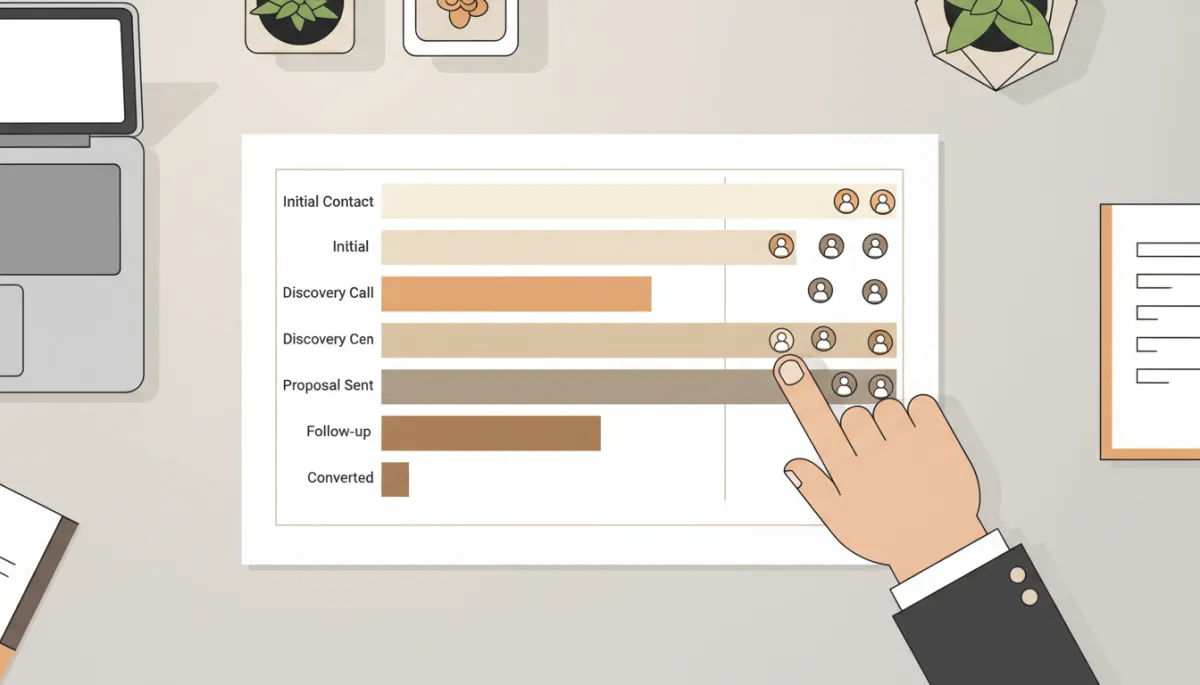
Most revenue sits in the fifth to twelfth contact range, yet few reach it.
Why Follow-Up Is the Heart of Sales in Senior Services
Forbes and Salesforce both point to follow-up as one of the most powerful levers for increasing conversion rates, with effective follow-up boosting sales by up to 20% or more. But in the senior market, follow-up is not just a sales technique. It is how you demonstrate reliability over time. Families are watching for who keeps their word, who checks in, and who disappears after the first conversation.
Trust builds over multiple touches. Each contact is a chance to reinforce, “You can count on us.”
Timing is unpredictable. A crisis can shift from “we’re just exploring” to “we need help now” in a single weekend.
Consistency signals stability. The provider that stays present feels safer than the one that vanished.
In other words, follow-up is not a separate “sales task.” It is the lived experience of your brand for the families you serve.
Automated Nurture Sequences: Consistency Without the Burnout
The businesses that follow up consistently are not the ones with the most persistent salespeople. They are the ones with the best systems. When follow-up depends on your personal memory and motivation, it is inconsistent by design. Some leads get three calls. Others get one. The quality of your follow-up is determined by how busy your week is, not by how important the lead is.
Automated nurture sequences solve this. Platforms like SilverCore.io let you design a series of SMS, emails, and even voicemail drops that go out on a schedule you control. A typical senior-market sequence might look like this:
Day 0: Immediate acknowledgement of the inquiry within 60 seconds, so the family knows they were heard.
Day 2: A brief SMS asking if they saw your first message and inviting questions.
Day 5: An email with a short, genuinely helpful resource tailored to their situation.
Day 9: Another SMS offering a quick 15-minute call at their convenience.
Day 14: A final email acknowledging the complexity of their decision and reminding them you are still here whenever they are ready.
None of these messages have to be aggressive. They simply keep you present. Industry data shows that structured, multi-touch follow-up cadences like this can increase conversion rates by 35% or more and recover a large percentage of “lost” or “stalled” leads at a much lower cost than finding new ones. Automated nurture sequences remove the dependency on memory and motivation, so every lead receives consistent care.
💡 Pro Tip: Automation is not about sounding robotic. It is about making sure your most human messages always go out on time.
Why Multi-Channel Follow-Up Works Better Than One-Channel Chasing
In 2026, effective follow-up strategies are multi-channel by default. Families do not live in just one communication lane, and neither should your outreach. Research on sales trends shows that combining channels—SMS, email, and phone—significantly outperforms relying on a single method alone, because different people respond to different formats at different times of day.
SMS has the highest open rates and is ideal for brief, warm check-ins and confirmations.
Email lets you share more detailed explanations, resources, and next steps in a format they can forward to siblings or spouses.
Phone calls are best when there is already some context and you are moving toward a specific decision or appointment.
A family might ignore an email on a hectic Monday but respond to a gentle text on Wednesday evening. Multi-channel follow-up increases the number of “right moments” you can catch without increasing the pressure on the family. With the right system, you can orchestrate all three channels in one place, so nothing slips through the cracks.
Turning Insight into Action: A Simple Follow-Up Blueprint
Map your current follow-up. Pull the last 30 leads that did not convert and count how many contacts each received. If your average is under three, you have found a major revenue leak.
Set your sequence length. For senior services, aim for at least five to seven touchpoints over 14–21 days, followed by a three-message re-engagement sequence at days 21, 30, and 45.
Write value-first messages. Every contact should offer something useful—a resource, a tip, or a simple check-in—not just “Are you ready to move forward?”
Automate the workflow. Connect your intake forms or phone inquiries to an automated sequence in your CRM so follow-up launches instantly and reliably for every lead.
Use behavioral triggers. If a family opens an email, clicks a link, or replies to a text, your system should adjust—pausing automation and prompting you for a personal, human response.
Review monthly. Track how many leads enter the sequence, where they respond, and which messages perform best. Refine over time instead of reinventing from scratch.
Frequently Asked Questions from Senior Market Professionals
Is it appropriate to follow up this many times?
Context and tone matter. If your messages are written with genuine care, offer something useful, and respect the family’s pace, consistent follow-up is not pushy. It is presence. Families in the middle of a care transition are overwhelmed and often lose track of providers they fully intended to call back. Your warm, predictable follow-up sequence is often the lifeline that keeps you on their radar.
What is the “right” number of follow-ups?
For most senior market services, five to seven touchpoints over 14–21 days is a strong primary sequence. After that, a short re-engagement series at days 21, 30, and 45 gives you additional chances without overwhelming families who are not ready. Past that, moving leads to a gentle, long-term nurture list—perhaps one helpful touch per month—keeps the door open without pressure.
Which channels should I prioritize?
Use all three—SMS, email, and phone—thoughtfully. SMS is best for quick, human check-ins. Email carries the heavier educational content. Phone calls are for deeper conversations once there is some context. Multi-channel follow-up respects the fact that different decision-makers in the same family may prefer different ways of communicating.
What if someone asks me to stop contacting them?
Honor that immediately. Remove them from your automated sequence and add them to a suppression list. Modern CRM systems make this simple and automatic. Respecting a clear “no” is both a legal requirement and a key part of maintaining trust in a sensitive market.
What is the most common mistake in follow-up sequences?
Turning every message into a sales pitch. In senior services, your sequence should sound like a steady, calm guide—sharing resources, asking simple questions, and inviting conversation. The direct “let’s move forward” conversation belongs in a live call, after the family has had time to feel known and supported.
The Close: Most of Your “Lost” Leads Were Never Lost
There are families right now who reached out to your business three weeks ago and never heard back after the second email. They are not cold leads. They are leads with a timing problem. For many of them, one more message, sent at the right moment in their decision process, is the difference between them becoming your client and them becoming someone else’s.
You are not chasing them. You are staying in the conversation long enough to be there when they are ready. Build the sequence. Write the messages with care. Let the system run. And stop writing off leads that were never actually cold. Most of the business you have been losing was never lost. It was just waiting for you to show up one more time.
About the Author
Sara Guida is the Founder of SilverCore.io, a growth system built specifically for professionals serving the senior market. Sara helps insurance agents, Medicaid planners, senior placement professionals, financial advisors, and elder law attorneys capture every lead, automate follow-up, and scale their businesses with simple systems that work.
If you are ready to stop losing leads in the gap between the first and fifth contact, book a demo at SilverCore.io. See exactly how an automated, multi-channel nurture system can help you stay present for every family that reaches out—without adding more to your already full plate.