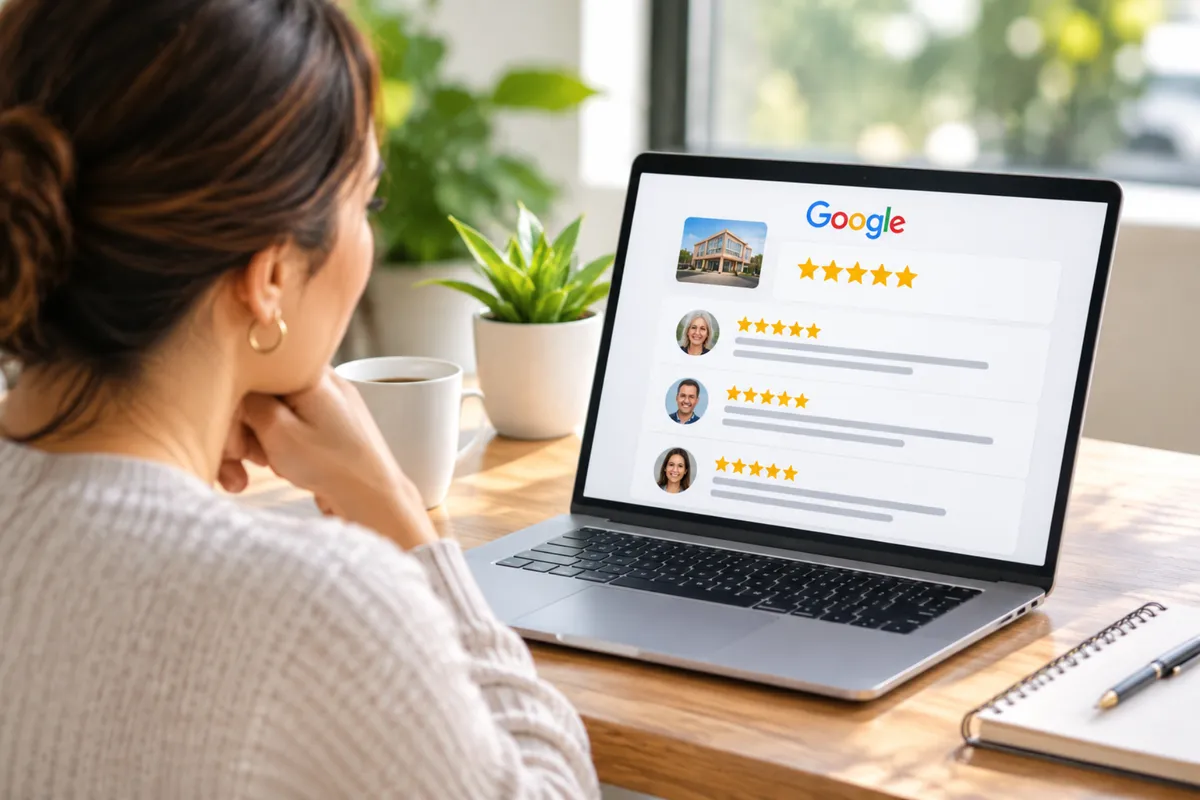
How to Get More Google Reviews Without Annoying Your Customers
You know Google reviews matter. But asking customers to leave one can feel awkward.
You don't want to seem pushy. You don't want to keep reminding people. And you certainly don't want customers to feel like they're being pressured into giving you five stars.
The good news? Getting more Google reviews doesn't have to be complicated or uncomfortable.
With the right approach, you can make it easy for customers to share their experiences while building a stronger online reputation for your business.
Why Google Reviews Matter for Local Businesses
Think about the last time you searched for a local business.
Maybe you compared insurance agencies, real estate professionals, or service providers in your area.
Chances are, you looked at their reviews before deciding who to contact.
Your potential customers are doing the same.
Google reviews can help your business in two important ways:
Local visibility: Review signals can contribute to how your business appears in local Google Search and Maps results.
Customer trust: Recent, authentic reviews help potential customers understand what it's like to work with you.
But it's not just about having the highest star rating.
People also notice what customers consistently say, how recent the reviews are, and whether your business responds to feedback.
That's why a good online reputation management strategy should focus on earning genuine feedback, not simply collecting more stars.
1. Ask at the Right Moment
Timing can make a big difference.
Instead of asking customers randomly, look for natural opportunities when they've had enough experience with your business to share meaningful feedback.
For example:
A homeowner has just completed a successful transaction with their real estate agent.
A client has finished an appointment with an estate planning professional.
A customer has received help resolving an insurance question.
A family has completed a positive onboarding experience with a home care agency.
A simple request is often enough:
"If you have a moment, we'd appreciate an honest Google review about your experience. Your feedback helps us improve and helps others learn about our business."
The key is to make the request feel like a natural part of your customer experience, not another sales pitch.
Important: Ask customers for honest feedback regardless of whether their experience was positive or negative. Avoid selectively requesting reviews only from happy customers.
2. Make Leaving a Review Easy
Even customers who want to leave a review may forget if the process takes too much effort.
Don't make them search for your business, find the right listing, and figure out where to leave feedback.
Instead, provide a direct Google review link.
You can find your review request link through your Google Business Profile and share it through appropriate customer communications.
Keep the message short and straightforward.
Sample review request:
"Thank you for choosing us! If you have a minute, we'd appreciate an honest Google review. Your feedback helps other customers learn what to expect when working with our team.
[Google Review Link]"
No lengthy explanation. No pressure. Just a simple invitation.
3. Build Review Requests Into Your Follow-Up Process
One of the biggest reasons businesses struggle to get consistent reviews is that asking depends on someone remembering to do it.
Your team gets busy. Appointments run late. Customer inquiries come in.
And review requests get forgotten.
This is where a simple follow-up system can help.
For example, you could:
Send a review request after a completed service.
Include a review link in an appropriate follow-up email.
Use your CRM to remind your team when it's time to request feedback.
Set up an automated review request after a completed customer interaction.
The goal isn't to send more messages. It's to make sure the right message goes out at the right time.
One thoughtful request is usually better than repeated reminders that frustrate customers.
4. Respond to the Reviews You Already Have
Getting new reviews is important, but what happens after someone leaves one matters too.
When potential customers visit your Google Business Profile, they may look at how you respond to both positive and negative feedback.
A thoughtful response shows that your business pays attention.
For positive reviews, thank the customer and acknowledge their experience.
For negative reviews, stay professional, recognize the concern, and offer an appropriate way to continue the conversation.
For businesses handling sensitive information, such as healthcare, senior care, insurance, or legal services, avoid sharing private customer details in public responses.
Remember, you're not just responding to the person who wrote the review.
You're also showing future customers how your business treats people.
5. Focus on Consistency, Not Just Five-Star Ratings
A business with hundreds of old reviews may not automatically feel more trustworthy than one with fewer but more recent, detailed reviews.
What matters is whether your online reputation gives potential customers confidence.
Rather than chasing a specific number of five-star reviews, focus on building a consistent process for collecting genuine customer feedback.
And avoid offering discounts, gifts, or other incentives in exchange for Google reviews. Google's policies prohibit incentivized reviews.
Your reputation should reflect real customer experiences.
Make Google Reviews Part of Your Bigger Marketing Strategy
Here's something worth remembering:
More Google reviews won't automatically bring you more customers.
Someone may find your business through Google Maps, read several positive reviews, and then visit your website.
But if your website is confusing, your services aren't clear, or nobody responds to their inquiry, that opportunity may still be lost.
That's why your Google Business Profile, website, reviews, and customer follow-up should work together.
At SilverCore, we look at the full customer journey:
Get Found → Get Chosen → Get Customers
Your reviews help people discover and trust your business. Your website and follow-up process help turn that trust into actual opportunities.
Not sure whether your Google Business Profile and online reputation are helping your business get chosen?
Book a Free Audit Report with SilverCore.io and Sara will take a closer look at your current marketing, identify potential gaps, and help you understand what your business should prioritize first.