
Win Leads: Master the 5-Second Response Rule
Sales, Lead Generation, Service Businesses
The Business That Responds First Wins. Every Time.
How the 5-second follow-up window is reshaping which service businesses grow and which ones quietly bleed leads every day.
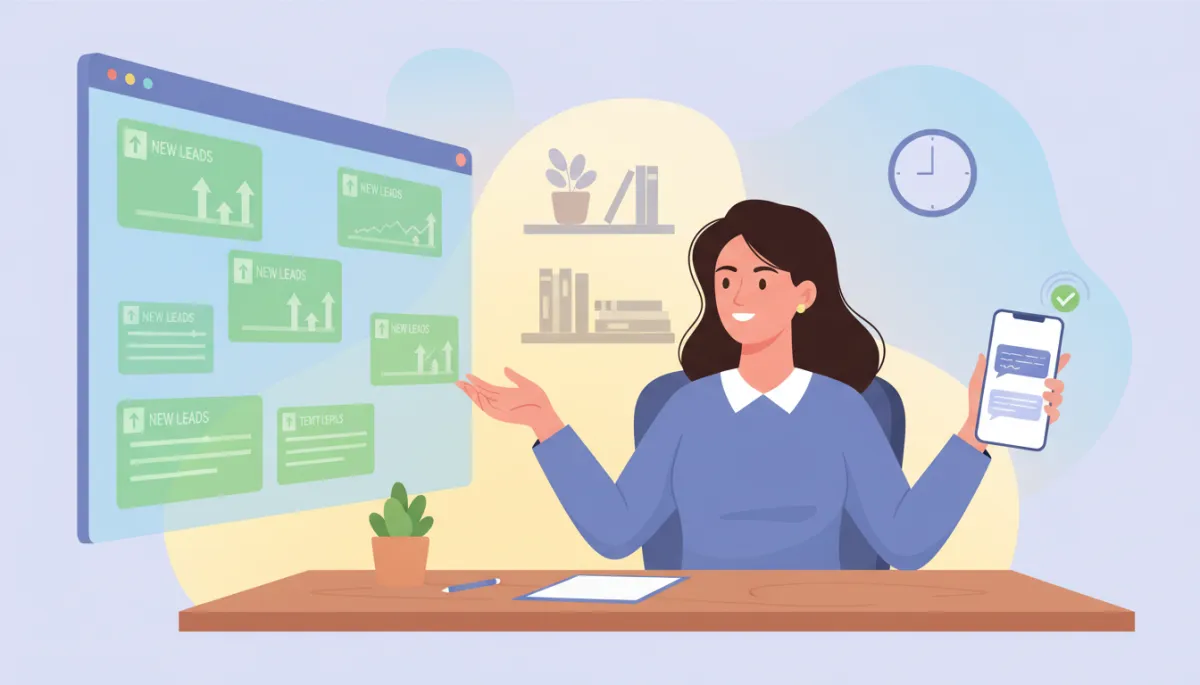
Win the Lead by Responding First
Turn every missed call into a captured opportunity in seconds
Automated follow-up turns missed calls into booked appointments in seconds, not hours.
The Business That Responds First Wins. Every Time.
How the 5-second follow-up window is reshaping which service businesses grow and which ones quietly bleed leads every day.
By Sara Guida | Founder, SilverCore
"We try to call people back within a few hours."
I hear this from business owners all the time. And every single time I hear it, I do the math in my head. If 78% of buyers go with the first business that responds, and your response window is "a few hours," you are not competing. You are watching other people close your leads.
The research on speed to lead is not subtle. Leads contacted within five minutes are 21 times more likely to qualify than leads contacted after 30 minutes. Not 21 percent more likely. Twenty-one times. And that window is not five minutes anymore. Automated systems are responding in seconds. The businesses using them are pulling leads from the pool before their competitors even know the phone rang.
The answer to how you fix this is not complicated. You build a system that responds before a human ever has to. Missed call text back, automated intake, instant pipeline entry. The window to be first is still open for most service businesses. But it is closing faster than most people realize.
📌 Key Takeaways
78% of buyers purchase from the first business that responds to their inquiry, making speed the primary competitive advantage in most service markets.
Leads contacted within 5 minutes are 21x more likely to qualify than those contacted after 30 minutes, according to research across 939 companies.
Only 7% of companies achieve a sub-5-minute response, meaning the bar to out-respond your competition is still remarkably low.
Missed call text back systems respond within 5–15 seconds and recover leads that would otherwise be permanently lost.
A properly built response system runs 24 hours a day without a human, making it the highest-ROI automation most service businesses can install.
The Problem: You Are Losing Leads You Do Not Even Know About
Let me describe something that happens in service businesses every single day.
A potential client searches Google for a contractor, a financial advisor, a home care agency, a law firm. They find three businesses. They call the first one. Nobody answers. They hang up — they do not leave a voicemail, because 67% of people ignore voicemails anyway — and they call the second business. Someone answers. They have a conversation. They book a consultation.
The first business never knows that lead existed.
That is not an edge case. That is Tuesday.
The industries most affected by this are the ones where inbound calls are the primary lead source: home services, professional services, medical and dental practices, real estate, financial services, law. These are businesses where a single client can be worth thousands or tens of thousands of dollars, and where a missed call is not a minor inconvenience — it is a significant revenue event.
The data on what this costs is staggering. A 2024 study found that missed calls cost the average small business approximately $126,000 per year in lost revenue. For home service businesses specifically, each missed call represents approximately $1,200 in lost revenue on average.
And yet 62% of home service businesses miss a majority of their inbound calls. More than half.
This is not happening because business owners do not care. It is happening because they have not built a system that responds when they cannot. They are relying on humans — imperfect, available-only-during-business-hours, sometimes-in-a-meeting humans — to manage the first critical contact point with every potential client.
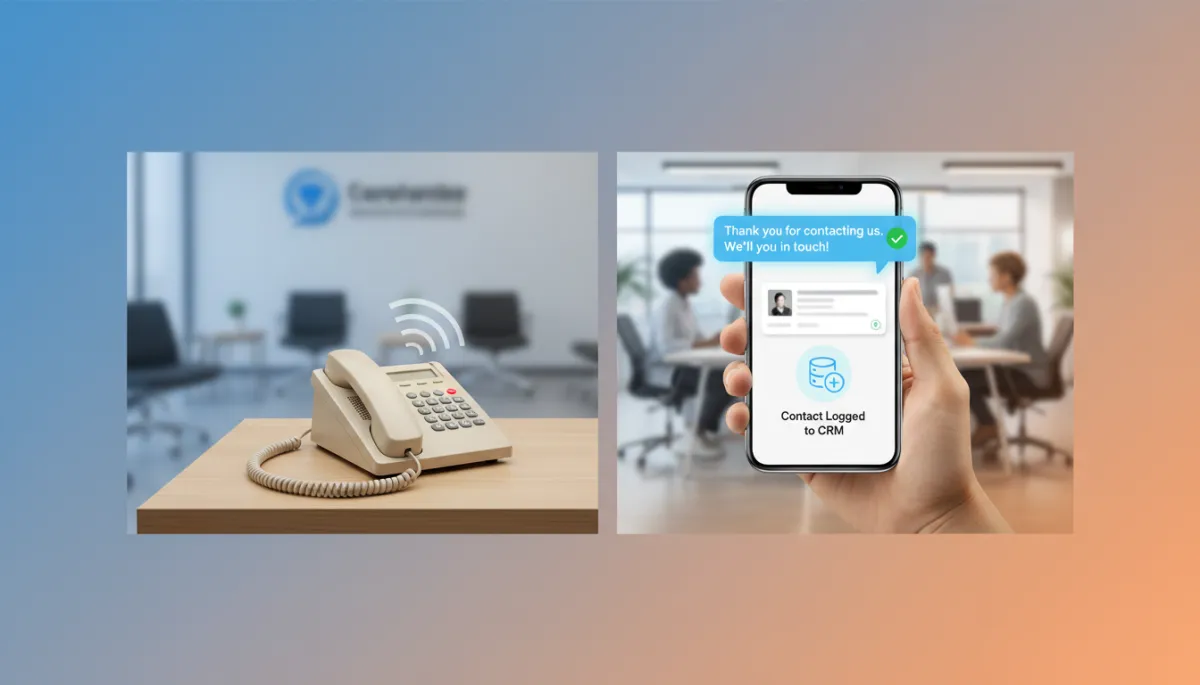
Split scene showing on the left a ringing office phone going unanswered on an empty reception...
Most lost leads die at the first missed call, long before a sales conversation.
The businesses fixing this problem are not hiring more receptionists. They are building a system that never sleeps.
The Evidence: What the Research Actually Shows
The speed-to-lead research has been building for years, and it consistently points to the same conclusion: the first business to make contact wins an outsized share of available leads.
The Harvard Business Review study that started it all. The study analyzed 2,241 U.S. companies and found that companies who attempted to reach leads within an hour were nearly seven times more likely to qualify the lead than those who tried after an hour. This was groundbreaking when it was published, but the standard has gotten dramatically more demanding since.
The 21x multiplier. Research across 939 companies found that leads contacted within 5 minutes are 21 times more likely to qualify than those contacted after 30 minutes. Not 21 percent. Twenty-one times. The dropoff in qualification rate as response time increases is not linear — it is a cliff.
The 78% rule. According to multiple sources tracking buyer behavior, 78% of buyers purchase from the first business that responds to their inquiry. This number holds across service categories, which tells you something important: most buying decisions are made in the first contact window, not during a long deliberation period. The first business to make a meaningful connection wins.
The current performance gap. Despite this data being widely known, only 7% of companies achieve sub-5-minute response times. The average response time across B2B companies is 47 hours — nearly two full days. This means that if you can build a system that responds within 60 seconds, you are immediately ahead of at least 90% of your competition.
What happens at 15 seconds. This is where the technology shift matters. Missed call text back systems fire within 5 to 15 seconds of an unanswered call. A 2025 analysis of service business data found that text responses under 60 seconds achieved a 73% appointment booking rate, compared to just 4% for responses after 30 minutes. That is not a marginal difference. That is a different business.
The conclusion from all of this data is the same: speed of response is not just a nice-to-have operational improvement. It is the primary determinant of whether your business wins or loses the lead.
The Solution: Build a System That Responds Before You Have to Think About It
When I started working with service business owners on their lead intake systems, the most common situation I found was this: they had a phone, a voicemail, and a good intention to call back. They were losing 30 to 50 percent of their inbound leads before a single conversation ever happened.
The fix is not complicated. It is a few automations working together.
Missed call text back. When a call goes unanswered, a text fires within 15 seconds. The message is warm, brief, and gives the caller an immediate next step. Something like: "Hi, this is Sara from SilverCore. Sorry I missed you — what can I help you with?" That single message recovers leads who would otherwise disappear. Eighty-five percent of callers who reach voicemail never call back. A text often reaches them before they have dialed their next option.
CRM intake. Every lead who responds to that text is automatically logged in the CRM with their contact information, the time and source of the call, and any information they share in the reply. No manual entry. No sticky notes. No leads falling through the cracks because someone was busy.
Automated follow-up sequence. Leads who respond to the initial text enter a 3-touch follow-up sequence: a same-day reply, a Day 3 check-in, and a Day 7 final message. Most businesses give up after one attempt. This sequence does not give up — it just does the work automatically.
Booking link in every message. Every outbound message includes a direct link to book a call or appointment. The fewer steps between first contact and booked meeting, the higher your conversion rate. Do not make the lead wait for a callback. Give them a way to take the next step right now.
The combination of these four elements creates a lead intake system that works 24 hours a day, captures leads across every time window, and never misses a follow-up because someone was in a meeting.
This is not advanced technology. This is standard infrastructure. The businesses using it are not the biggest businesses in their market. They are the most systematized.
Practical Steps: How to Build Your Response System This Week
Step 1: Measure your current response time. Call your own business number right now. Count the rings before it goes to voicemail. Check how long your voicemail greeting is. Ask your team honestly: how long does it take to return a missed call? This is your baseline.
Step 2: Install missed call text back. Most CRM platforms including GoHighLevel have this feature built in. It takes under an hour to configure. Turn it on today. Write a simple, warm message. Test it by calling your own number from another phone. The message should fire within 15 seconds.
Step 3: Connect to your CRM pipeline. Every lead who responds to the automated text should automatically create a contact record in your CRM and enter a pipeline stage labeled "Missed Call Recovery." This gives you visibility into how many leads you are recovering and at what rate.
Step 4: Build your 3-touch follow-up sequence. For leads who do not respond to the initial text, configure a Day 3 email and a Day 7 text. Keep each message short. Add value or new information at each touch. Include a booking link in every message.
Step 5: Reactivate your historical missed leads. Pull every contact from the last 90 days who called but never booked. Run a 3-message reactivation campaign. These are not cold leads. They called you. A well-timed message will recover a meaningful percentage of them.
Step 6: Set a 30-day review. Check your response rate on the initial text, your conversion rate from recovered leads, and your total recovered revenue. Adjust based on what the data shows. This review takes 15 minutes and tells you exactly what your system is worth.
Step 7: Protect the system. Once it is built, do not let it atrophy. Monthly audits, message tests, and automation checks keep your system performing at the level that produces results.
Frequently Asked Questions
Does missed call text back work for all types of service businesses?
Yes, with minor adjustments. The underlying principle — respond fast, give the lead a clear next step — applies across industries. The message copy, the booking link destination, and the follow-up sequence content should be customized to your specific service and client type. A home care agency will use different language than a financial planning firm, but the automation structure is the same.
What should my missed call text back message actually say?
Short is better. Acknowledge the missed call, introduce yourself or your business, ask what you can help with or offer a direct booking link. Keep it under 160 characters if possible. Test two or three versions and watch which one gets the highest reply rate. The winning message often surprises people — it is usually the simplest one.
Will automated text responses feel impersonal to my clients?
If done right, no. The key is writing the message in your natural voice, keeping it brief, and making the response feel like it came from a real person who genuinely wants to help. Avoid corporate language. Write it the way you would text a client you already have a relationship with.
How do I handle leads who respond outside of business hours?
Your CRM logs every response with a timestamp. Set up an internal notification so your team sees it first thing in the morning. Add a short note to your text that sets expectations: "I will follow up personally by [TIME]." Leads who know when to expect a human response are more patient than leads who hear nothing.
What is the fastest way to get this system running?
If you are using GoHighLevel, missed call text back is a native feature in the settings panel. You can have it live in under an hour. Connect it to a pipeline stage and you have the core system built. A booking calendar and follow-up sequence can be layered in over the following week.
The Close: The Window Is Still Open — But Not for Long
Every week a business runs without a response system, it is making a decision. The decision to let 30 to 50 percent of its inbound leads walk out the door uncaptured. The decision to compete on everything except the thing that matters most to buyers: whether you showed up when they were ready.
The window to build this system before your competition does is still open. The majority of service businesses have not done it yet. The majority of your local competitors are still relying on manual callbacks and good intentions.
But the businesses that have built this system are pulling leads from the pool every day. They are not doing it by having better services or better prices. They are doing it by being first.
You already have the tools. You already have the knowledge. The only thing between you and a system that never misses a lead is the decision to build it.
The five-second window does not wait. Neither should you.
Sara Guida is the founder of SilverCore, the CRM and Growth System built for businesses where every lead matters. SilverCore serves service-based business owners who want predictable lead capture, automated follow-up, and full pipeline visibility without the chaos of managing it manually. Sara speaks on systematized growth for relationship-based businesses and is based in the United States.