Boost Revenue with Reputation Management
Reputation Management, Occupancy Strategy, Community Ratings
Reputation Management as Occupancy Infrastructure: Turning Reviews into $54,000+ in Resident Revenue
For modern communities, online reviews aren’t just marketing fluff—they’re infrastructure that quietly powers occupancy, pricing, and long-term Resident Revenue.
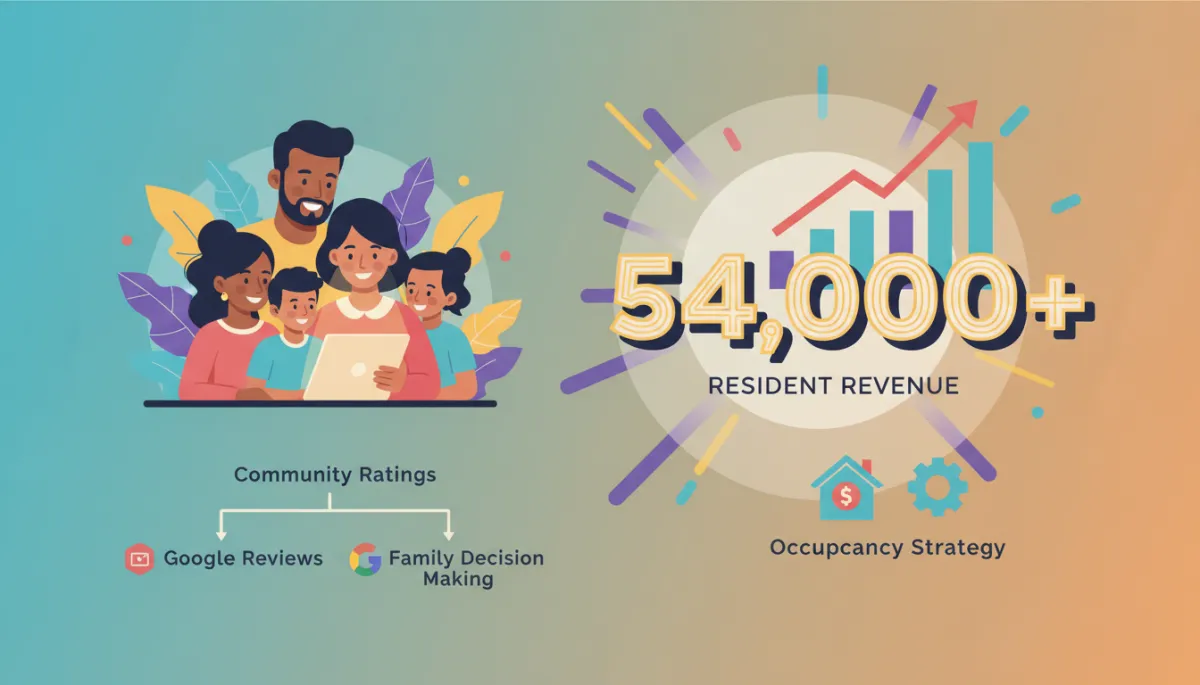
Picture this: a family of four at the kitchen table, laptops and phones out. They’ve shortlisted three communities. On paper, you’re a perfect fit—great location, solid amenities, fair pricing. But as they scroll through Google Reviews and Community Ratings, yours sits at 3.4 stars while a competitor shows 4.5 with recent, thoughtful feedback.
In less than five minutes, their Family Decision Making kicks in: “Let’s move on to the one with better reviews.” No call. No tour. No chance to recover. That quiet moment just cost you a resident—and for many properties, that’s $54,000+ in lifetime Resident Revenue walking away based entirely on online reputation.
Reviews as Core Occupancy Infrastructure, Not a Side Project
Research across hospitality and housing consistently shows that better online ratings drive higher occupancy and pricing power. Studies in hospitality, for example, find that a one-point increase in review score can lift occupancy by up to 7.5 percentage points and boost bookings by more than 5%. The logic is the same for multifamily and build-to-rent: stronger ratings equal stronger Occupancy Strategy.
When you view Reputation Management as infrastructure, you stop treating reviews as random comments and start treating them like a pipeline that feeds your leasing funnel, pricing models, and renewal rates. For owners, operators, and agencies, this is where tactical execution matters most.
A Tactical Framework for Reputation Management That Drives Revenue
Step 1: Quantify the Revenue at Stake
Start with simple math:
Average monthly rent per unit × average length of stay (in months) = lifetime Resident Revenue per lease.
For many communities, that number easily crosses $54,000+ over a resident’s full tenure.
Then, estimate how many prospects never inquire because of weak Community Ratings. Even losing one or two families per year to poor reviews can mean six figures in lost revenue over a few years.
Step 2: Make Google Reviews a Daily Operational Metric
For businesses and agencies, reputation can’t live in a quarterly report. Build it into daily and weekly rhythms:
Track average rating, review volume, and response time across key platforms, especially Google Reviews.
Set minimum thresholds as part of your Occupancy Strategy (for example, 4.3+ average rating and at least 10 new reviews per quarter).
💡 Pro Tip: Share a quick “review score snapshot” in every leasing or marketing standup so teams see reputation as a core KPI, not a side task.
Step 3: Systematize Review Generation from Happy Residents
Most communities have more satisfied residents than their ratings suggest; they just aren’t being asked at the right moments. Build simple, repeatable triggers:
After a successful maintenance request, send a short text with a direct review link.
At renewal time, invite long-term residents to share why they’ve stayed.
After community events, follow up with a simple “How did we do?” plus a review CTA.
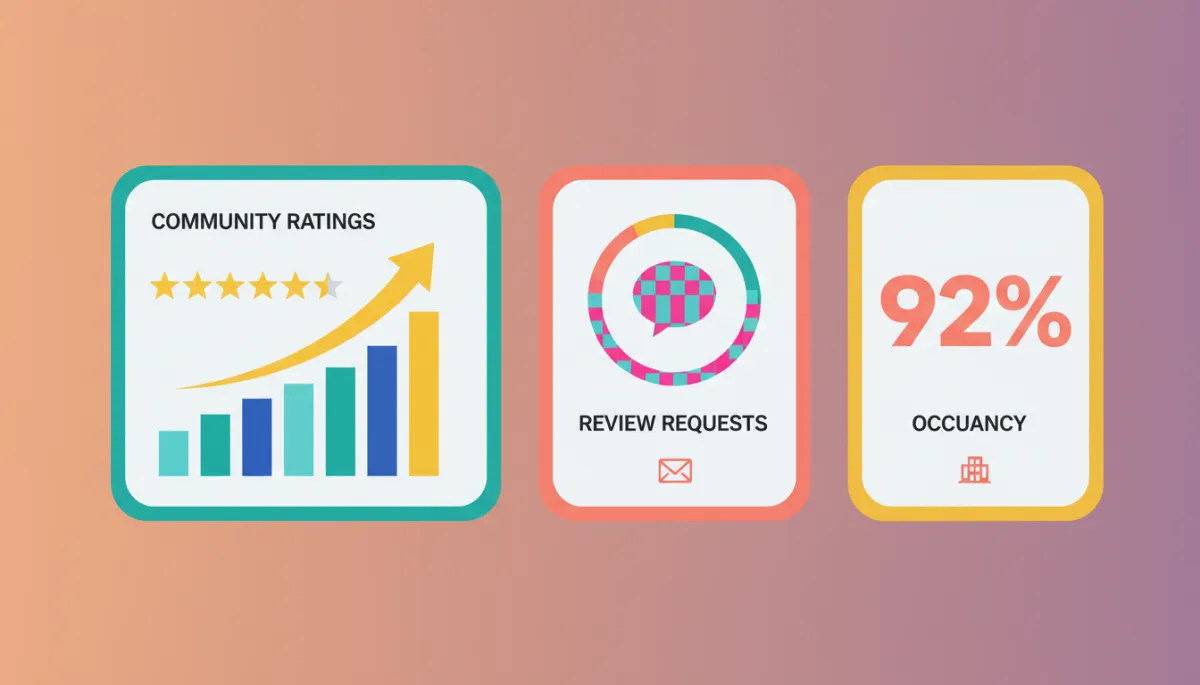
Connecting review workflows to occupancy metrics turns feedback into predictable revenue.
Step 4: Respond Strategically, Not Emotionally
Prospects don’t expect perfection; they expect professionalism. For businesses and agencies managing multiple communities:
Reply to every review—positive or negative—within 48 hours.
Thank happy residents and mirror their language so future families see what you do best.
For negative reviews, acknowledge, apologize if appropriate, and move details offline. Your response is a public signal to every future family researching you.
Step 5: Turn Insights into Operational Upgrades
Reviews are a free focus group. Tag and categorize comments (noise complaints, maintenance delays, staff friendliness, amenities) and connect them to on-site improvements. As those changes roll out, highlight them in your responses and marketing: “You spoke, we listened.” That closes the loop and strengthens both reputation and retention.
How SilverCore Helps You Operationalize Reputation as Infrastructure
At SilverCore.io, we help communities, owners, and agencies treat Reputation Management like the critical occupancy infrastructure it is. From automated review requests and centralized response workflows to analytics that tie Community Ratings directly to Resident Revenue, we make it easier to protect that $54,000+ every time a family sits down to choose their next home.
If you’re ready to stop losing families at the research stage and start using reviews as a strategic Occupancy Strategy lever, visit SilverCore.io to see how our platform can plug directly into your existing operations and turn every review into a revenue asset. Book a demo at silvercore.io