Winning Business Strategies for 2026
Business Strategy, Follow-up Systems, Senior Market Growth, Automated Follow-up, AI Prioritization, Conversion Optimization
Talking Point: The Businesses Winning in 2026 Are Not Outspending Competitors on Leads, They Are Outfollowing Them
The most profitable businesses and agencies are not the ones with the biggest ad budgets. They are the ones with disciplined, automated, and AI-optimized follow-up systems that turn more of the leads they already have into paying customers—especially in high-value sectors like the senior market.
The Tactical Argument: Lead Volume Is Not Your Bottleneck — Follow-Up Is
Most organizations in 2026 are still fighting the wrong battle. They are trying to outspend competitors on ads, SEO, and list rentals, assuming that more leads equal more revenue. Yet benchmarks show that average reply rates for cold outreach hover around 3–5%, even as marketing budgets expand. The real constraint is not reach; it is the lack of a systematic, multi-step follow-up infrastructure that nurtures, qualifies, and converts the leads already in the pipeline.
In sectors like senior living, home care, and age-friendly services, this gap is even more costly. A single missed inquiry can represent years of recurring revenue. Businesses growing occupancy and revenue in the senior market are winning because they treat follow-up as core Business Strategy, not as an afterthought handled manually by an overextended sales team. With structured Follow-up Systems, they are seeing Automated Follow-up increase response rates by up to 250%, while AI Prioritization improves conversion by roughly 50% compared with traditional “first-in, first-out” approaches.
📌 Key Takeaway: In 2026, the competitive edge is not how many people you reach, but how consistently, intelligently, and automatically you follow up with the people who have already raised their hands.
A Step-by-Step System for Building a High-Conversion Follow-Up Protocol
To move from ad-spend dependency to Conversion Optimization, businesses and agencies need a clear, repeatable framework. Below is a practical, five-stage protocol you can adapt across verticals, with specific emphasis on Senior Market Growth use cases.
Step 1: Map Every Lead Entry Point and Standardize Data Capture
Begin by auditing how prospects currently enter your world:
Website forms (tour requests, pricing inquiries, care assessments)
Phone calls and voicemail drops
Referral partners and agencies
Walk-ins or event registrations
For each source, define a minimum data standard: name, role (senior vs. adult child), contact details, time frame, budget sensitivity, and care or service interests. Without standardized data, even the most advanced Automated Follow-up will underperform because messages cannot be tailored to context or urgency—a critical factor in senior decisions that often involve health, safety, and family dynamics.
Step 2: Design a Multi-Channel, Multi-Step Follow-Up Journey
Next, architect a follow-up journey that extends well beyond a single call or email. Benchmark data shows that response rates increase significantly when organizations send at least two to three structured follow-ups rather than stopping after the first attempt. In many cases, the second touch alone can lift response from around 9% to 13%, and overall follow-up sequences can drive response rates in the 20%+ range when executed correctly.
Immediate confirmation (0–5 minutes): An automated email or SMS acknowledging the inquiry, setting expectations, and offering a simple next step (e.g., “Schedule your tour” or “Download your care planning guide”).
Day 1–2 nurture: A personalized follow-up that addresses the prospect’s specific concern—safety, social engagement, affordability—rather than a generic brochure blast.
Day 3–7 multi-channel touches: A blend of email, SMS, and phone outreach, each with a clear micro-conversion goal (book a visit, attend a webinar, speak with a care advisor).
Day 8–30 education and trust-building: Content that de-risks the decision: testimonials from families, virtual tours, cost comparisons, and checklists for choosing the right senior community or service.
💡 Pro Tip: Treat each touchpoint as a step in a conversation, not a repeated sales pitch. Seniors and their families respond better to guidance than pressure.
Step 3: Automate the Repetitive, Humanize the Critical Moments
Once the journey is defined, identify which steps can and should be automated. Research on email automation in 2026 shows that automated flows outperform one-off campaigns by wide margins, with open rates in the 42–52% range and dramatically higher click and conversion metrics. For senior-focused businesses, this translates into more tour bookings, assessment calls, and ultimately, higher occupancy without buying more leads.
Organizations using Automated Follow-up consistently report response rate lifts of around 250% versus manual, ad-hoc outreach. This is particularly impactful in the senior market, where decision cycles can be long and emotionally complex. Automation ensures that no inquiry is forgotten and that every prospect receives timely, relevant communication even when teams are busy with on-site care or tours.
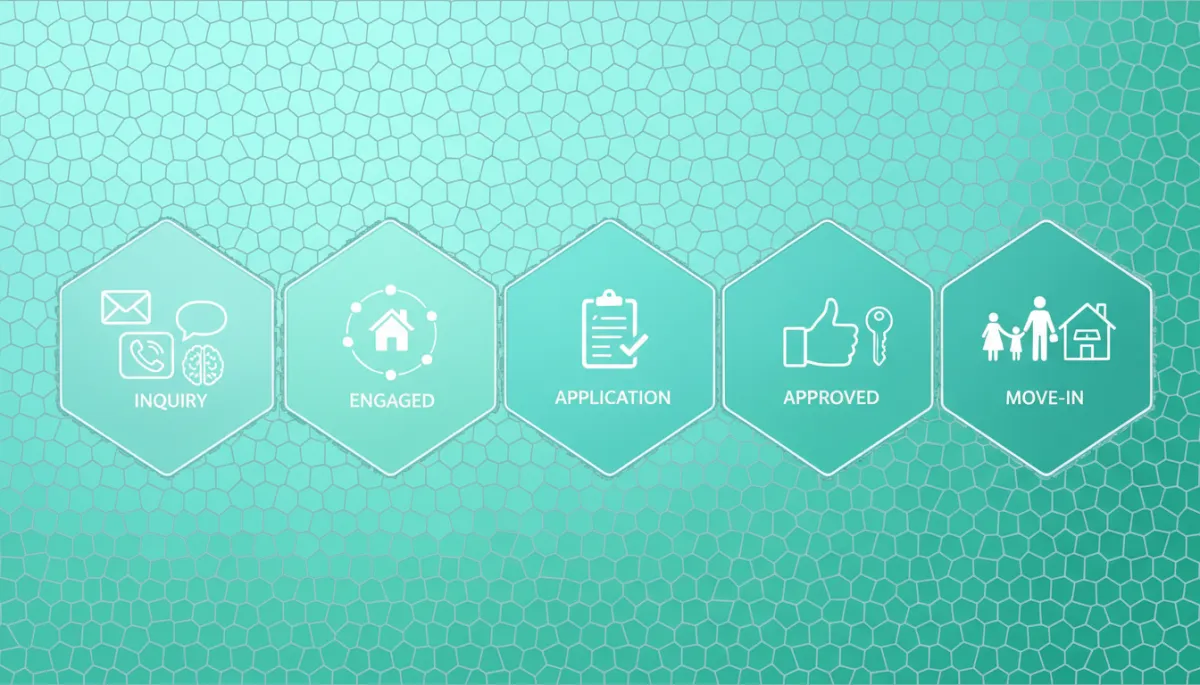
Systematic, automated journeys ensure every senior inquiry moves forward, not forgotten in a spreadsheet.
Step 4: Use AI Prioritization to Focus Human Effort Where It Matters Most
Not all leads are equal. Some are ready to tour this week; others are exploring options for six months from now. AI Prioritization models—trained on behavior, engagement, demographics, and historical conversion data—can score leads and surface the ones most likely to convert in the near term. Industry reports across 2026 show that AI-driven targeting and prioritization can lift conversion rates by 12–28%, with many teams reporting at least a 50% improvement in conversion compared to manual or first-come-first-served approaches.
For senior-focused operators, this means your sales counselors spend more of their time speaking with families who are actively comparing communities or services, rather than chasing unqualified or low-intent inquiries. Combined with Automated Follow-up, AI Prioritization becomes a force multiplier: the system nurtures everyone, while your team engages deeply with the right people at the right moment.
Step 5: Measure, Optimize, and Align Around Revenue, Not Activity
Finally, build a measurement layer that tracks performance across the entire follow-up journey, not just top-of-funnel metrics. For agencies and businesses serving the senior market, the key indicators should include:
Time-to-first-response for new inquiries (minutes, not hours or days)
Response rate by follow-up step and channel (email, SMS, phone)
Tour or consultation booking rate per 100 inquiries
Move-in or contract conversion rate by AI score band
When you can see, for example, that automated sequences are generating a 250% increase in responses and AI-ranked “A” leads are converting at 50% higher rates, it becomes much easier to justify shifting budget away from pure lead generation and into better infrastructure. This is the essence of modern Conversion Optimization: fewer wasted leads, higher occupancy, and more revenue from the same or even smaller marketing spend.
How Systematic Follow-Up Drives Senior Market Growth in 2026
The senior market is expanding rapidly, with rising demand for age-friendly housing, in-home care, telehealth, wellness programs, and financial planning services. Reports from leading analysts highlight opportunities in active senior living communities, preventive health offerings, and technology-enabled care. Yet operators consistently report the same challenge: a large volume of inquiries that never progress to a visit, consultation, or enrollment.
Businesses that are growing occupancy and revenue most effectively have embraced follow-up as a core growth lever:
They deploy Automated Follow-up to ensure every family receives timely, empathetic communication, even outside of business hours.
They use AI Prioritization to segment urgent health or housing needs from long-term planners, tailoring cadence and messaging to each group.
They align sales, marketing, and operations around occupancy and lifetime value, not just lead counts or call volumes.
The outcomes are tangible: higher tour-show rates, more move-ins per 100 inquiries, and stronger word-of-mouth as families experience structured, supportive communication throughout the decision process. In a market where trust and timing are everything, these follow-up systems are becoming the defining competitive advantage.
Why This Matters for Agencies and Multi-Site Operators
For agencies, the message is clear: clients no longer just need “more leads.” They need infrastructure that ensures those leads are nurtured and converted. Agencies that can deliver follow-up strategy, implementation, and optimization will be far stickier and more valuable than those competing solely on media buying or creative. For multi-site senior living operators, home care networks, and age-tech providers, standardized Follow-up Systems across locations can create a measurable lift in occupancy and revenue, while also providing executive teams with clean, comparable data.
📌 Key Takeaway for Leaders: The organizations that win the senior market in 2026 will be those that treat follow-up as infrastructure—designed, automated, AI-optimized, and relentlessly improved—not as a collection of individual tasks.
Where SilverCore.io Fits In
SilverCore.io is built for exactly this moment. Rather than helping you simply buy more attention, SilverCore.io focuses on the systems layer: designing and deploying follow-up infrastructure that is tailored to the senior market and to the realities of your team. From Automated Follow-up sequences that reflect the emotional complexity of senior decisions, to AI Prioritization that highlights which families need immediate contact, the platform is designed to help you outfollow your competitors and turn more of your existing demand into long-term revenue.
If you are a business or agency serving the senior market and you are ready to move beyond “more leads” toward a scalable, data-driven follow-up protocol, the next step is straightforward: audit your current journey, quantify the leakage, and explore how a systematic approach—supported by automation and AI—can change your occupancy and revenue trajectory over the next 12–24 months.
In 2026, the businesses that win will not be the ones shouting the loudest at the top of the funnel. They will be the ones quietly, consistently, and intelligently following up—turning every inquiry into an opportunity, and every opportunity into a measurable result.